

ITSM Change Management in ServiceNow handles the technical side of IT infrastructure modifications—system upgrades, patches, and configuration changes—through structured approval workflows and risk assessments. OCM (Organizational Change Management) addresses the human element, focusing on stakeholder engagement, communication strategies, training programs, and resistance management to guarantee your teams actually adopt new processes. You’ll need ITSM for technical implementation and OCM for user readiness. While ITSM tracks what changes in your systems, OCM prepares your people for those changes. The distinction matters because technical success without human buy-in leads to failed deployments and wasted resources, which you’ll discover becomes critical when both approaches must work together.
What Is ITSM Change Management in ServiceNow?
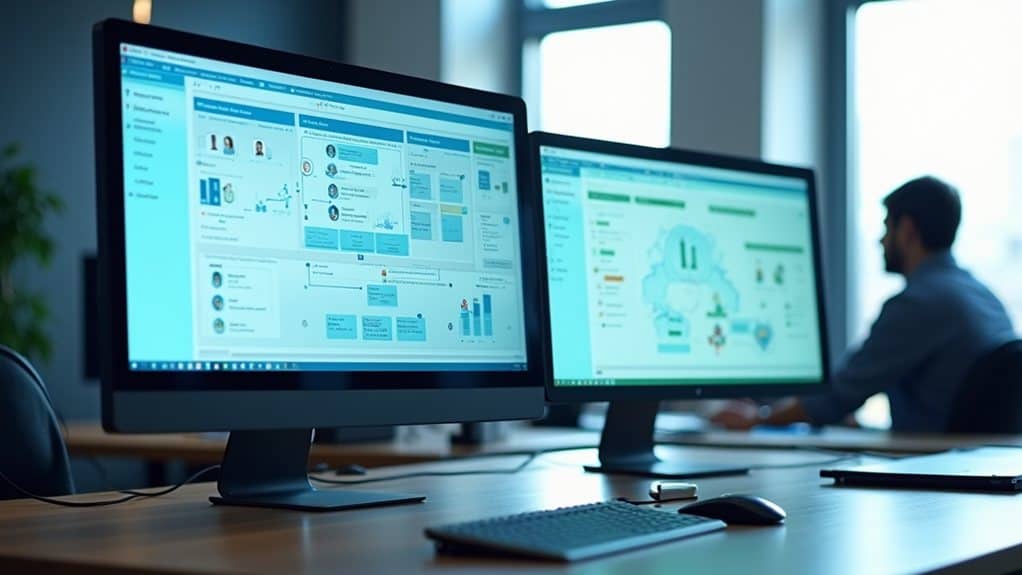
Change management in ServiceNow represents a systematic approach to handling modifications within your IT infrastructure, affirming that updates, patches, and system alterations don’t disrupt business operations. This ITSM framework helps you track, assess, and implement changes while minimizing risk to your organization.
ServiceNow’s change management framework ensures IT modifications occur systematically while protecting business continuity and minimizing organizational risk.
Within ServiceNow’s platform, you’ll find robust tools for evaluating Change Impact across your systems, allowing you to predict potential disruptions before they occur. The software enables you to document every modification, establish approval workflows, and maintain compliance with industry standards.
Stakeholder Analysis becomes straightforward through ServiceNow’s interface, letting you identify who needs notification about upcoming changes.
You’ll coordinate between IT teams, business units, and end-users seamlessly, affirming everyone understands how modifications affect their operations and responsibilities.
What Is OCM in ServiceNow?
Organizational Change Management (OCM) in ServiceNow focuses on the people side of change, guaranteeing your teams successfully adopt new processes and technologies rather than just implementing technical solutions.
You’ll need to understand OCM’s core components—communication strategies, training programs, and stakeholder engagement—to minimize resistance and maximize user adoption.
The implementation process typically involves evaluating organizational readiness, developing targeted change strategies, and measuring adoption metrics to confirm your ServiceNow changes deliver their intended business value. Additionally, a comprehensive client acquisition strategy ensures that all stakeholders are informed and engaged throughout the change process.
OCM Definition and Purpose
In ServiceNow, OCM (Organizational Change Management) represents the structured approach to helping people shift from current processes to new ways of working when you’re implementing or modifying the platform.
Its primary purpose is to minimize change resistance by preparing your workforce for shifts, guaranteeing they understand why changes matter and how to adapt effectively.
You’ll find that OCM focuses on the human side of transformation, addressing organizational culture and employee concerns that technical implementations alone can’t resolve.
This methodology guides stakeholders through communication plans, training programs, and support systems that increase adoption rates.
When you integrate OCM into your ServiceNow deployment, you’re not merely installing software; you’re building sustainable change that aligns with your business objectives and empowers your team. Additionally, utilizing effective outreach techniques can further enhance the connection between your workforce and the changes being implemented.
Key Components of OCM
Five vital components form the foundation of effective OCM in ServiceNow implementations, each addressing critical aspects of organizational transformation. You’ll need to understand how these key components work together to drive successful change management initiatives within your organization.
| Component | Purpose |
|---|---|
| Stakeholder Engagement | Identifies and involves affected parties throughout the shift |
| Communication Strategy | Guarantees consistent messaging across all organizational levels |
| Training Programs | Equips users with necessary skills and knowledge |
| Resistance Management | Addresses concerns and overcomes adoption barriers |
| Success Metrics | Measures effectiveness and tracks progress |
These change management elements create a structured approach that minimizes disruption while maximizing user adoption. You’ll find that integrating these components into your ServiceNow deployment greatly increases your chances of achieving desired outcomes and maintaining long-term organizational support. Additionally, leveraging marketing automation tools can further enhance client interaction and engagement during the change process.
OCM Implementation Process
Implementing OCM in ServiceNow requires a systematic approach that transforms your organization’s readiness from initial planning through post-deployment support.
You’ll start by evaluating change readiness across departments, identifying potential resistance points before they become obstacles.
Your communication strategies should target different audience segments, guaranteeing stakeholder training reaches everyone from executives to end-users.
Designate change champions within each team who’ll drive adoption and provide peer support.
You’ll need to establish clear success metrics that measure both technical implementation and user acceptance.
Build robust feedback loops that capture real-time insights, allowing you to address concerns quickly.
Your resistance management tactics should be proactive, not reactive.
Finally, embed continuous improvement processes that evolve your OCM practices based on measurable outcomes and stakeholder input.
Scope, Process, and Stakeholder Differences
Understanding the differences between technical change management and organizational change management (OCM) requires examining their distinct scopes and stakeholder environments.
Technical changes focus on IT infrastructure modifications with a limited group of technical stakeholders, while OCM addresses the human impact across broader organizational levels, engaging everyone from executives to end users.
You’ll need to adapt your engagement strategies based on these scope distinctions, since technical changes demand precision and risk mitigation, whereas OCM initiatives prioritize communication, training, and adoption support.
Key Scope Distinctions
When you’re working with ServiceNow Change Management, you’ll quickly discover that not all changes are created equal—and that’s precisely why the platform categorizes them into distinct types with different scopes, processes, and stakeholder requirements.
Understanding these key scope distinctions helps you manage change impact effectively:
- Standard Changes require minimal approval and follow pre-authorized procedures with limited stakeholder notification.
- Normal Changes demand thorough assessment, CAB review, and extensive communication strategies across departments.
- Emergency Changes operate under accelerated timelines but still maintain critical oversight protocols.
- Major Changes involve enterprise-wide transformation, requiring executive approval and multi-tiered stakeholder engagement.
Each category determines your approval workflow, risk assessment depth, and the breadth of communication you’ll need to execute successfully within your organization.
Stakeholder Engagement Models
Because stakeholder engagement directly influences change success rates, you’ll need to map your communication strategy to the specific change type you’re managing.
OCM requires thorough stakeholder mapping across all organizational levels, identifying champions, resistors, and influencers who’ll shape adoption outcomes. Your engagement strategies must address emotional responses, cultural shifts, and behavioral modifications through customized messaging.
ITSM focuses narrowly on technical stakeholders—system administrators, developers, and service desk teams who’ll implement or support the modification. You’ll communicate through standardized channels like CAB meetings, release notes, and incident alerts.
While OCM demands ongoing dialogue, surveys, and feedback loops to measure sentiment, ITSM stakeholder engagement remains transactional, prioritizing operational readiness over emotional buy-in and limiting outreach to those directly affected by technical changes.
When to Use ITSM Change Management vs OCM

Many organizations confuse ITSM Change Management with Organizational Change Management (OCM), but they’re fundamentally different practices that serve distinct purposes.
ITSM focuses on technical modifications to IT infrastructure, while OCM addresses the human side of transformation.
Here’s when to use each approach:
- ITSM Change Management – Deploy for system upgrades, software patches, and infrastructure changes requiring risk assessment and change types classification.
- OCM – Apply when user adoption matters, requiring stakeholder training and communication strategies to overcome resistance management challenges.
- Both Together – Major implementations need combined approaches, aligning implementation timing with feedback loops.
- Success Measurement – ITSM tracks change metrics like deployment success, while OCM monitors success criteria including behavioral shifts.
Understanding these distinctions guarantees you’re applying the right methodology for the best outcomes.
Common Scenarios Where Both Approaches Are Needed
Large-scale digital transformations consistently demand both ITSM and OCM working in tandem, as technical excellence means nothing if your users won’t adopt the changes you’ve implemented.
When you’re deploying new ServiceNow modules across your organization, you’ll need ITSM to manage the technical rollout while OCM addresses change resistance through targeted training and support.
ITSM delivers the technical foundation, but OCM ensures your people actually embrace and use what you’ve built.
Major infrastructure upgrades require this dual approach too, where ITSM handles the technical implementation schedule and OCM guarantees stakeholder communication keeps everyone informed and engaged.
You’ll also need both approaches during organizational restructures that affect your service delivery model, mergers and acquisitions involving system integrations, and enterprise-wide process standardization initiatives.
Each scenario requires technical precision alongside people-focused strategies to succeed.
How ITSM Change Management Works in ServiceNow

When you open ServiceNow’s Change Management module, you’ll find a structured workflow that transforms chaotic modification requests into controlled, trackable processes.
The system guides you through crucial stages:
- Risk Assessment and Planning – You’ll evaluate change impact and determine change readiness before proceeding.
- Approval Workflows – Automated routing guarantees proper stakeholder training and authorization at each level.
- Implementation Tracking – Real-time monitoring captures progress while communication strategies keep teams aligned.
- Post-Implementation Review – Feedback loops measure user adoption and support continuous improvement.
This workflow integrates technical controls with organizational readiness checks, making certain you’re not merely making changes—you’re making them stick.
The platform’s automation handles routine tasks while you focus on strategic decisions.
How OCM Functions Within ServiceNow
When you’re working with Organizational Change Management (OCM) in ServiceNow, you’ll find it operates through structured workflows that guide stakeholders through people-focused change initiatives alongside technical implementations.
The OCM framework integrates seamlessly with ITSM modules, particularly linking change requests with communication plans, training schedules, and stakeholder assessments.
This integration guarantees you’re addressing both the technical aspects of change and the human factors that determine whether your changes actually succeed in production.
OCM Workflow and Processes
Organizational Change Management (OCM) operates within ServiceNow through a structured workflow that coordinates people, processes, and technology during shifts.
You’ll maneuver a systematic approach that guarantees stakeholders adapt effectively to transformations while minimizing disruption.
The OCM workflow includes these core components:
- Assessment Phase: You evaluate change impact across departments, identifying affected teams and potential resistance points.
- Planning Stage: You develop communication strategies and establish user training programs customized to specific roles.
- Execution Process: You deploy training sessions, distribute resources, and maintain open feedback channels.
- Monitoring Activities: You track adoption metrics, address concerns promptly, and adjust strategies based on real-time data.
This framework guarantees you’re supporting employees throughout shifts, measuring progress continuously, and achieving sustainable organizational transformation without compromising productivity or employee engagement.
Integration With ITSM Modules
ServiceNow’s OCM capabilities don’t operate in isolation—they’re deeply embedded within the platform’s IT Service Management (ITSM) ecosystem, creating powerful connections between people-focused change initiatives and technical service delivery.
You’ll find OCM seamlessly interacting with Incident Management, Problem Management, and Configuration Management Database (CMDB) modules through native ServiceNow integration.
When you implement organizational changes, the platform automatically links affected services, business processes, and infrastructure components.
This integration delivers notable ITSM benefits by providing complete visibility into how transformation initiatives impact your technical environment. You can track dependencies, assess risks across systems, and coordinate communication strategies that address both human and technical dimensions.
The unified approach guarantees you’re not managing change in silos, but orchestrating thorough shifts that account for every stakeholder and system component involved.
Why ITSM Changes Fail Without OCM Support

Despite implementing sophisticated ITSM tools and frameworks, many organizations watch their change initiatives crumble because they’ve overlooked a critical component: organizational change management (OCM).
Your technical infrastructure might be flawless, but without addressing the human element, you’re setting yourself up for failure.
Here’s why ITSM changes falter without OCM:
- Change resistance emerges when employees don’t understand the rationale behind new processes.
- Inadequate communication strategies leave stakeholders confused about their roles and responsibilities.
- Lack of training means users can’t effectively adopt new systems, regardless of technical excellence.
- Missing leadership support undermines credibility and momentum.
You can’t simply deploy technology and expect transformation.
OCM bridges the gap between technical implementation and actual user adoption, guaranteeing your ITSM changes deliver intended results.
Integrating OCM and ITSM in ServiceNow
When you integrate OCM and ITSM within ServiceNow, you’re creating a unified framework that treats technology deployment and people transformation as inseparable partners.
This integration allows you to track technical changes alongside organizational readiness metrics, guaranteeing you’re measuring both system performance and user adoption simultaneously.
You’ll gain visibility into how well your teams are prepared for upcoming changes, identifying gaps before they derail implementation.
By linking change readiness assessments directly to ITSM workflows, you can pause technical rollouts when stakeholder buy-in hasn’t reached critical thresholds.
This approach transforms ServiceNow from a simple ticketing system into a thorough change orchestration platform.
You’re not merely managing incidents and requests—you’re actively shaping how your organization evolves, making sure every technical update has the human support needed for lasting success.
Coordinating Technical and Human Changes Successfully

Building on this integrated foundation, you’ll discover that successful coordination demands precise timing and clear accountability structures.
Change Coordination requires synchronizing technical upgrades with thorough Training Programs to guarantee your teams aren’t left behind. Stakeholder Alignment becomes critical when Technical Integration affects multiple departments simultaneously.
Essential coordination elements include:
- Risk Assessment across both technical and Human Factors to identify potential disruptions
- Communication Strategies that keep everyone informed throughout implementation phases
- Feedback Mechanisms allowing real-time adjustments based on user experiences
- Scheduled checkpoints where technical teams and change champions review progress together
You’ll need to establish clear ownership for each component while maintaining flexibility.
When technical changes deploy without corresponding human readiness, you’re setting yourself up for resistance and delays that could’ve been prevented.
Frequently Asked Questions
Can Servicenow Automatically Trigger OCM Activities When an ITSM Change Is Created?
Yes, you can configure ServiceNow to automatically trigger OCM activities when creating an ITSM change. You’ll use automated workflows and change notifications to seamlessly integrate organizational change management with your technical change processes.
What Certifications Are Available for Servicenow Change Management and OCM?
ServiceNow offers Certified Implementation Specialist (CIS) for ITSM and Strategic Portfolio Management certifications covering change management. You’ll find certification benefits include validated expertise and career advancement. Access training resources through ServiceNow’s Now Learning platform for thorough preparation materials.
How Much Does OCM Module Licensing Cost Compared to ITSM?
OCM licensing comparison shows it’s typically more expensive than ITSM since it’s a premium add-on. You’ll need ITSM cost analysis from ServiceNow sales representatives, as pricing varies based on your organization’s size and requirements.
Which Servicenow Roles Need Access to Both OCM and ITSM Modules?
Change managers, organizational change consultants, and project managers typically need access to both modules. Their role responsibilities span technical and organizational change, requiring access permissions across OCM and ITSM to coordinate activities effectively and guarantee alignment between systems.
Can Third-Party Change Management Tools Integrate With Servicenow OCM?
Yes, you can integrate third-party tools with ServiceNow OCM, though you’ll face integration challenges regarding tool compatibility. Proper implementation guarantees improved user experience and maintains change visibility across your entire organization’s change management ecosystem.
Final Thoughts
You’ll see the best results when you treat ITSM change management and OCM as complementary forces rather than separate initiatives. Technical changes need human adoption to succeed, while organizational transformations require solid IT infrastructure. By integrating both approaches in ServiceNow, you’re addressing the complete change lifecycle—from system modifications to user acceptance. This dual focus reduces resistance, minimizes disruption, and guarantees your changes actually stick instead of failing due to poor planning or lack of employee buy-in.
Enjoying our content? Make us a preferred source on Google.
Add us as a Preferred Source on Google