

Change Management in Digital Transformation: Avoid Costly Mistakes
Discover how effective change management in digital transformation prevents costly missteps, boosts adoption, and protects your credibility—before your next big initiative backfires.

Discover how effective change management in digital transformation prevents costly missteps, boosts adoption, and protects your credibility—before your next big initiative backfires.
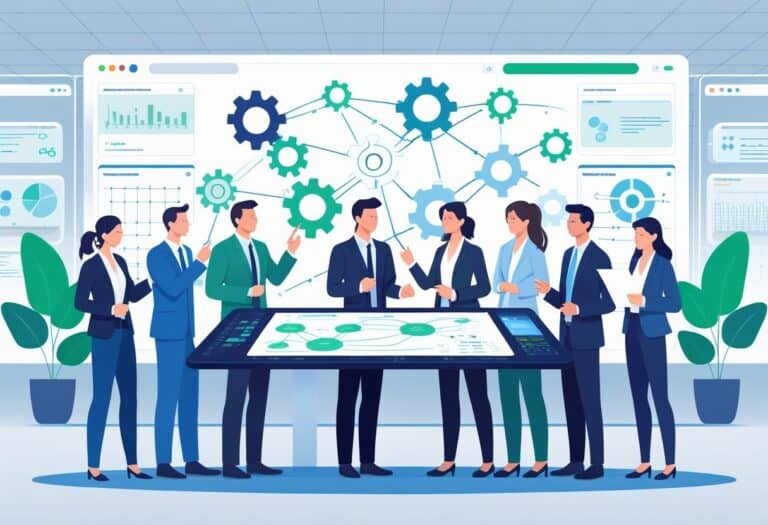
An open-source change management strategy involves employees as active co-creators rather than passive recipients, making organizations 14 times more likely to achieve change success while reducing the risk of change fatigue by 29 percentage points.

Facilitate transformative innovation by uniting diverse teams around shared purpose—but how will you overcome the invisible barriers blocking true collaboration?

Implementing a change-ready culture transforms organizations, but most leaders miss these critical psychological elements that make adaptation possible.

Kurt Lewin was a German-American psychologist who fundamentally changed how we understand human behavior, group dynamics,…

Explore the life of John Kotter, a leading voice in leadership and organizational change. His ideas have shaped how companies adapt, grow, and stay competitive in fast-moving environments.
Gap analysis is a method used to assess the difference between the current state of a process, system, or organization and the desired future state. It helps identify areas for improvement and develop strategies to bridge the gaps.
Characteristics
- **Current State Assessment**: Evaluates the existing processes, systems, or performance levels.
- **Desired State Definition**: Clearly outlines the goals or standards that need to be achieved.
- **Identifying Gaps**: Pinpoints specific areas where performance or processes fall short.
- **Action Plan Development**: Creates a roadmap for addressing the identified gaps.
Examples
- **Business Performance**: A company may conduct a gap analysis to compare its current sales figures with its sales targets for the year, identifying areas where sales strategies need improvement.
- **IT Systems**: An organization might analyze its current software capabilities against the latest technology trends, determining what upgrades or new systems are necessary to remain competitive.
- **Employee Skills**: A training department may perform a gap analysis to assess the current skill levels of employees compared to the skills required for upcoming projects, leading to targeted training programs.
An engagement survey is a tool used by organizations to measure employee engagement levels, gather feedback on workplace satisfaction, and identify areas for improvement. These surveys typically assess various aspects of the employee experience, including job satisfaction, communication, leadership effectiveness, and overall morale.
Characteristics
- **Confidentiality**: Responses are often anonymous to encourage honest feedback.
- **Frequency**: Surveys can be conducted regularly, such as annually or biannually, to track changes over time.
- **Comprehensive**: They cover a wide range of topics related to employee experience and organizational culture.
- **Action-oriented**: Results are used to inform strategies for improving employee engagement and satisfaction.
Examples
- **Pulse Surveys**: Short, frequent surveys that focus on specific topics or recent changes in the workplace.
- **Annual Engagement Surveys**: In-depth surveys conducted once a year to assess overall employee engagement and satisfaction.
- **Exit Surveys**: Surveys given to employees leaving the organization to understand their reasons for departure and gather insights for improvement.
Cultural assessment is a systematic evaluation of an organization's culture, values, beliefs, and behaviors. It helps identify the strengths and weaknesses of the current culture and how it aligns with the organization's goals and objectives.
Characteristics
**- Involves gathering qualitative and quantitative data**
**- Focuses on employee perceptions and experiences**
**- Analyzes communication patterns and decision-making processes**
**- Identifies cultural barriers to change**
**- Provides insights into employee engagement and satisfaction**
Examples
**- Surveys or questionnaires distributed to employees to gauge their views on company values**
**- Focus groups that discuss the current workplace environment and cultural dynamics**
**- Observations of team interactions and leadership styles to assess alignment with desired culture**
**- Review of internal communications and policies to identify cultural inconsistencies**