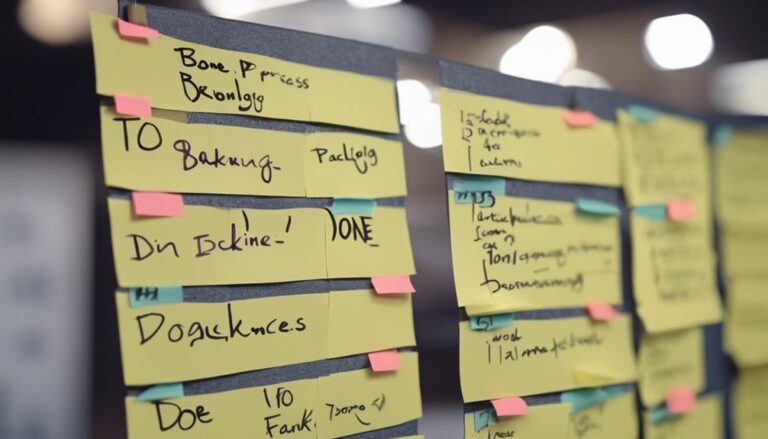

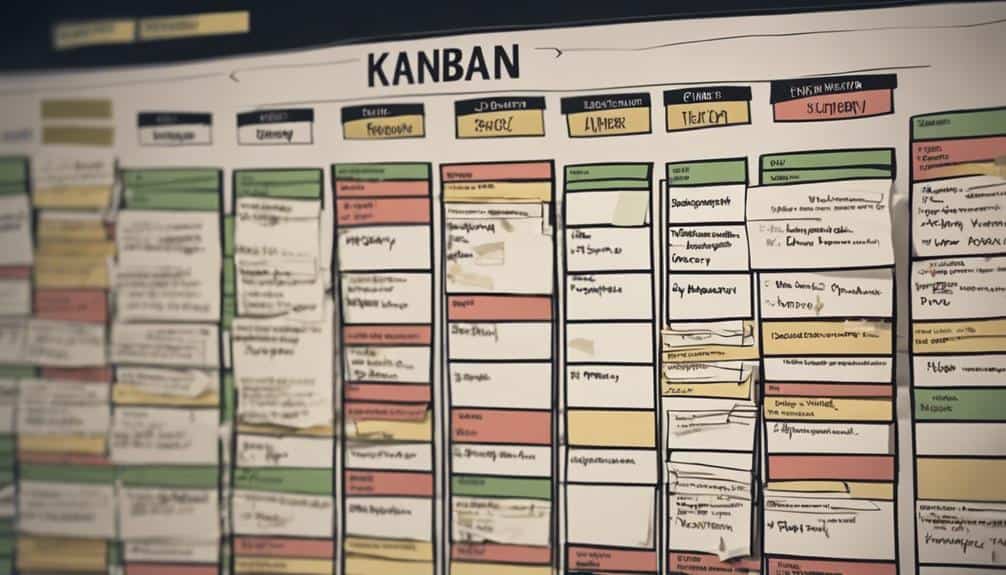

You may not be aware that Kanban boards can effectively incorporate backlogs to enhance workflow efficiency and task management. Understanding how Kanban boards integrate backlogs can significantly impact your team's productivity and project outcomes.
By following a structured step-by-step guide, you can discover the benefits of organizing and prioritizing your Kanban backlog, ultimately leading to improved project delivery and team collaboration.
Key Takeaways
- Backlogs in Kanban boards centralize and prioritize work items for efficient task management.
- Prioritizing backlogs ensures focus on high-value tasks, optimizing workflow productivity.
- Regular backlog reviews and refinement enhance alignment and clarity within the team.
- Efficient task execution is facilitated by categorizing backlog items based on importance and urgency.
Understanding Kanban Backlogs
To grasp the essence of Kanban Backlogs in software development, envision them as dynamic repositories housing prioritized lists of work items crucial for team productivity and efficiency.
In Kanban methodology, the backlog serves as a central hub where all upcoming tasks, including user stories, bugs, and tasks, are meticulously organized based on priority.
This meticulous prioritization is essential for ensuring that the team focuses on the most critical work items first, maximizing efficiency and output.
Benefits of Prioritizing Backlogs
Prioritizing backlogs in software development not only streamlines workflow efficiency but also ensures that teams are laser-focused on delivering high-value tasks promptly. By prioritizing backlog items, teams can allocate resources effectively, directing their efforts towards the most critical tasks that align with project goals. This approach minimizes the risk of working on low-impact items that may not contribute significantly to the overall objectives.
Moreover, prioritizing backlogs allows teams to plan sprints or iterations with precision. By tackling high-value items first, teams can ensure that their efforts are directed towards tasks that bring the most value to the project. This strategic approach not only enhances productivity but also enables teams to adapt swiftly to changing requirements and market needs. By focusing on key tasks and adjusting priorities as needed, teams can stay agile and responsive, ensuring that their work remains aligned with the project's evolving demands.
Organizing Your Kanban Backlog
When organizing your Kanban backlog, begin by prioritizing tasks based on their importance and urgency for optimal efficiency and workflow management. Here's a strategic approach to help you organize your Kanban backlog effectively:
- Prioritize Tasks: Start by identifying the most critical tasks that need immediate attention and those that are essential for the project's progress.
- Utilize Color Coding: Use color coding or labels to categorize backlog items. Assign different colors to tasks based on their status, such as to-do, in progress, or completed, for better visibility and tracking.
- Break Down Tasks: Break down larger tasks into smaller, manageable sub-tasks within the backlog. This will help in better task management and tracking progress more effectively.
Remember to regularly review and update your backlog to ensure it accurately reflects the current state of your project. Additionally, collaborate with your team members to discuss and refine the backlog items for alignment and clarity. By implementing these strategies, you can enhance collaboration and streamline workflow within your Kanban system.
Prioritizing Tasks in the Backlog
Consider ranking tasks in your backlog based on their importance and urgency to effectively prioritize and manage your workflow. Prioritizing tasks is crucial for ensuring that your team focuses on what matters most. When prioritizing, think about the business value each task brings, any dependencies it has on other tasks, and the deadlines involved.
By doing so, you can ensure that your team works on the most critical tasks first, delivering value efficiently. Ranking tasks in the backlog also enables better resource allocation and decision-making.
Regularly reviewing and adjusting task priorities is essential to keep them aligned with the project goals and objectives. This iterative process allows for flexibility in responding to changing requirements and ensures that your team remains productive and focused on what needs to be done.
Tackling Backlog Items Efficiently
To efficiently tackle backlog items, ensure you prioritize based on customer value and team capacity while breaking down tasks into manageable units for easier tracking and completion. Here are three key strategies for tackling backlog items efficiently:
- Utilize Classes of Service: Categorize backlog items according to their importance and urgency. This classification helps in sequencing tasks effectively and ensures that high-priority items are addressed first, optimizing customer value delivery.
- Implement Sequencing Policies: Establish clear guidelines on how backlog items should be sequenced for execution. By defining the order of tasks based on dependencies and priorities, you enhance workflow efficiency and minimize bottlenecks in task completion.
- Embrace Continuous Improvement: Regularly review and update backlog items to reflect changing project requirements and priorities. By fostering a culture of continuous improvement, you can enhance team productivity, refine task management processes, and drive better delivery outcomes.
Maintaining a Clean Backlog
To maintain a clean backlog, prioritize items according to project goals and regularly review them for relevance.
Remove outdated entries to keep focus sharp and break down larger tasks into smaller, manageable ones for better tracking.
Collaborate with team members to refine and define backlog items, ensuring clarity and understanding for an efficient workflow.
Prioritize Backlog Items
Prioritize backlog items by ranking them based on importance and value to the project, ensuring your team focuses on critical tasks first to maintain a clean backlog. To achieve this effectively, consider using techniques like MoSCoW prioritization or Weighted Shortest Job First (WSJF).
Here's how you can prioritize backlog items successfully:
- MoSCoW Prioritization: Use this technique to categorize items into Must-haves, Should-haves, Could-haves, and Won't-haves, helping your team understand what needs immediate attention.
- Value vs. Effort Analysis: Evaluate each backlog item based on the value it brings versus the effort required, allowing you to prioritize high-value, low-effort tasks.
- Stakeholder Alignment: Collaborate with stakeholders to ensure that the backlog reflects their priorities, fostering transparency and shared understanding.
Regularly Review Backlog
Regularly reviewing the backlog ensures that outdated or irrelevant items are removed, maintaining a clean and focused list of prioritized work. Conduct backlog grooming sessions to refine and prioritize items according to current project needs and goals.
To keep the backlog manageable, break down large items into smaller, actionable tasks for better tracking and execution. It's essential to involve the team in backlog maintenance to gather input, align priorities, and ensure everyone is on the same page.
Utilize backlog metrics and data analysis to optimize backlog management practices, improving overall team efficiency. By following these practices, you can streamline your workflow and enhance productivity within your team.
Remove Outdated Backlog Items
As you iterate through your backlog, it's crucial to identify and eliminate any outdated or irrelevant tasks to maintain a streamlined and focused list of priorities.
To remove outdated backlog items effectively, follow these steps:
- Regularly Review: Schedule periodic reviews to assess the relevance of each backlog item.
- Collaborate with Team: Engage with your team to validate the necessity of each item and ensure alignment with project goals.
- Validate Necessity: Consider the priority and value of each task to determine its importance for current and future work.
Tips for Backlog Management
When managing your backlog, prioritize items based on customer value and team capacity.
Regularly update the backlog to align with changing priorities and project needs.
Clear communication within the backlog is key to ensuring smooth workflow and team efficiency.
Prioritizing Backlog Items
To effectively prioritize backlog items for efficient workflow, it's crucial to consider customer value and business impact as the primary criteria. Here are some tips for backlog management:
- Utilize Classes of Service: Categorize backlog items based on urgency, size, or other relevant factors to streamline prioritization.
- Implement FIFO Method: Maintain the order of backlog items by following the First In, First Out method, ensuring older items are addressed first.
- Collaborate with Stakeholders: Engage with stakeholders to align on backlog priorities, gather valuable insights, and make informed decisions for effective backlog management.
Updating Backlog Regularly
Regularly updating the backlog is essential for maintaining alignment with current priorities and optimizing workflow efficiency in backlog management. To ensure the backlog remains relevant, review it frequently and prioritize items based on customer value, urgency, and dependencies. Remove any outdated or irrelevant items to keep the backlog focused and clear.
Collaboration with stakeholders is crucial for gathering feedback and input to refine the backlog effectively. Utilize backlog grooming sessions to adjust and refine backlog items, enhancing planning and execution.
Clear Backlog Communication
For effective backlog management, clarity in communication is paramount to ensure team members grasp the priorities and expectations associated with backlog items. To enhance backlog communication, consider the following tips:
- Define Clear Priorities: Clearly outline the importance and order of backlog items to guide the team on what needs to be addressed first.
- Set Expectations: Communicate the desired outcomes and requirements for each backlog item to avoid misunderstandings and ensure alignment within the team.
- Utilize Visual Aids and Documentation: Visual representations and detailed documentation can help convey information more effectively, aiding in better understanding and retention of backlog priorities and expectations.
Improving Workflow With Backlog Prioritization
Improving workflow efficiency through strategic backlog prioritization enhances team productivity and focus on high-value tasks. By prioritizing the backlog, teams can ensure that the most crucial tasks are completed promptly, allowing for better decision-making on what work to tackle next.
This approach not only improves workflow visibility but also boosts team productivity by streamlining the process and reducing time wasted on less critical tasks. Effective backlog prioritization fosters better communication within the team, aligning everyone towards accomplishing shared goals.
Kanban boards play a vital role in this process by providing a visual representation of the prioritized tasks, aiding in task management and ensuring that the team stays focused on delivering value. Prioritizing the backlog is a strategic way to enhance team collaboration, maintain focus on high-priority work, and ultimately drive productivity and efficiency in task completion.
Frequently Asked Questions
What Are the 5 Steps of Kanban Implementation?
To implement Kanban successfully, start by visualizing workflows for clarity. Set WIP limits to keep tasks manageable. Embrace continuous improvement for growth. Analyze cycle times for efficiency. Prioritize tasks based on team collaboration. This fosters a productive and harmonious work environment.
How Do I Create a Backlog in Kanban?
To create a backlog in Kanban, organize tasks based on priority, categorize them effectively, and maintain the backlog regularly. Refine items, estimate tasks, and ensure efficient workflow management. This strategic approach optimizes task flow and boosts productivity.
Do Kanban Boards Have Backlogs?
Yes, Kanban boards have backlogs. They are vital for backlog management, task prioritization, and workflow efficiency. Embracing agile methodology, teams collaborate to continuously improve by refining backlogs, ensuring clear goals, and fostering teamwork for successful project outcomes. Incorporating backlog in kanban board allows teams to visualize and track the progress of individual tasks, creating transparency and accountability. This enables teams to better understand their workload, identify potential bottlenecks, and make informed decisions on task prioritization. Overall, the use of kanban boards and backlogs fosters a more organized and efficient workflow for teams practicing agile methodologies.
Do You Do Backlog Grooming in Kanban?
In Kanban, you absolutely do backlog grooming. It's crucial for refining tasks, prioritizing work effectively, and enhancing agile methodologies. By breaking down user stories and continuously improving, you ensure streamlined sprint planning and team synergy.
Conclusion
As you implement these strategies for managing your Kanban backlog, you'll soon discover the power of prioritization and organization in optimizing your workflow.
By following these steps, you'll not only streamline your processes but also enhance collaboration and achieve better project outcomes.
Stay tuned for more tips and tricks to further improve your Agile team dynamics and make the most out of your Kanban board.
Exciting developments await as you continue to master the art of backlog management!