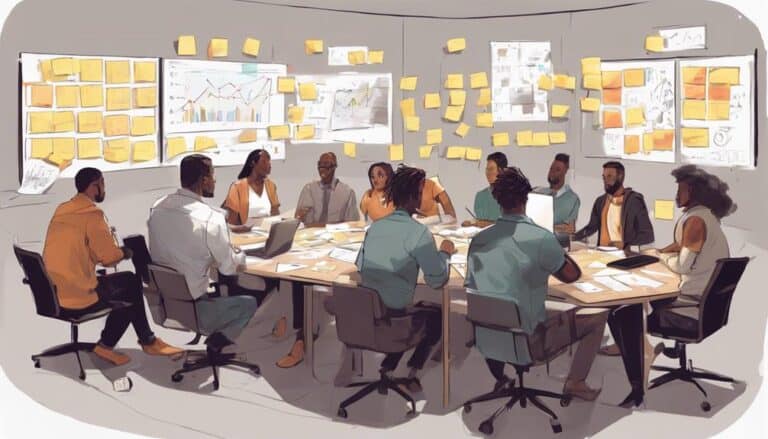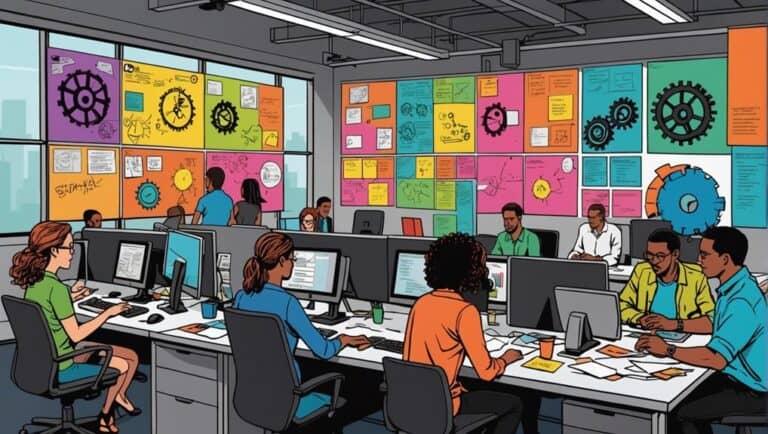



If you’re tired of change initiatives that drag on, burn out your team, and still miss the mark, Agile change management offers a different path. Instead of locking into a rigid plan, you move in focused sprints, gather feedback quickly, and adjust before small issues become costly failures. You involve the right people early, show progress fast, and reduce resistance—yet Agile isn’t just “going faster.” It demands a shift in how you lead, plan, and measure success…
Why Traditional Change Efforts Stall in Modern Organizations

Although most organizations invest heavily in major transformations, traditional change efforts still stall with striking regularity because they’re built for a world that no longer exists. Organizations with strong change management strategies experience 264% greater revenue growth, underscoring how costly it is to cling to traditional approaches.
You see it in the numbers: roughly 70 percent of initiatives miss their targets, draining resources and credibility. Skipping early assessments of change readiness leaves leaders blind to the support, training, and resources people actually need to adapt. When employees own implementation planning, change success increases by 24%, yet most organisations still rely on leader-driven rollouts that feel imposed rather than co-created. You push new programs, but employees, already worn down by change fatigue, respond with skepticism or open resistance.
Communication breakdown widens the gap, as leaders broadcast plans while people hear only threats to roles, identity, and stability. Without clear metrics, you can’t tell what’s working, so you repeat the same missteps, eroding trust further.
When change feels like a threat, vague metrics and one-way messages only accelerate distrust and resistance
Strategy and culture also clash, and when leaders can’t explain the “how,” your workforce quietly decides to wait you out. Eventually, even high performers disengage completely.
Core Principles of Agile Change Management
When you strip away the buzzwords, agile change management is really about how you deliver meaningful results faster, with less waste and less resistance. You break large initiatives into smaller, manageable parts so people can adopt incremental change without being overwhelmed.
You focus on early, continuous value delivery, releasing small slices of change that customers can actually use, then you refine based on their feedback. Teams that integrate change tools with Agile practices rely on continuous feedback loops to make real-time adjustments and stay aligned with evolving business goals.
You hold regular retrospectives to examine outcomes, learn from experience, and adjust your approach based on real data. Instead of celebrating activity, you track outcomes: adoption, performance, and satisfaction.
You implement change incrementally, in short cycles, so you can test ideas, surface risks early, and adjust without betting the whole organization on one big launch.
You cultivate a collaborative mindset, bringing business, technical, and front-line people together daily.
With adaptive leadership, you treat change as a practical skillset, using systems thinking and ongoing reflection to keep improving for sustained, customer-centric results across the organization.
Comparing Agile and Waterfall Approaches to Change
Even before you choose tools or build a roadmap, the way you structure change—Agile or Waterfall—quietly determines how much risk, waste, and resistance you’ll face. Whichever you choose, investing in a thorough change readiness assessment up front helps uncover cultural and capability gaps that could derail execution.
In Agile vs Waterfall decisions, you’re really choosing between flexibility and rigidity in Change Management. Agile depends on continuous customer feedback, while Waterfall typically involves customers primarily during initial requirements and final delivery. Agile treats change as iterative, letting you adjust scope, priorities, and solutions as feedback arrives, so value shows up in small, testable increments.
Waterfall locks scope early, pushes testing and validation to the end, and punishes mid‑project surprises. Agile favors minimal documentation, intense collaboration, and continuous stakeholder involvement; Waterfall leans on formal plans, handoffs, and phase gates. Some organizations adopt hybrid models that combine Agile-style Sprints with Waterfall governance to gain adaptability without sacrificing structure.
If your environment shifts quickly, Agile keeps you learning and adapting; if it’s stable and highly regulated, Waterfall may still fit.
Know the tradeoffs before you commit.
Building a Cross-Functional Change Squad

Choosing Agile over Waterfall changes more than your delivery rhythm; it changes who needs to be in the room every day. Establish a shared vision early so every discipline is aiming at the same outcome instead of optimizing for its own silo. You’re no longer throwing work over the wall; you’re building a cross-functional change squad that owns outcomes together.
Bring in development, QA, UX, business analysis, and operations, then add a Product Owner and Scrum Master to stabilize cross-functional dynamics and team collaboration. Done well, this structure leads to faster response times to challenges and higher confidence in visualizing and planning product features.
Look for T-shaped people, deep in one discipline yet curious and capable across others, so the squad can self-manage without constant external help. Ground the squad’s collaboration in core change management principles so cross-functional decisions about scope, risk, and stakeholder engagement remain aligned as the pace of delivery increases.
Start small with a pilot team or rotate people gradually, using retrospectives, skill-shares, and paired work to refine the mix.
Expect resistance, but highlight faster learning, fewer handoffs, and clearer accountability. Those wins will shift entrenched mindsets.
Designing Iterative Change Roadmaps and Sprints
To turn your change vision into reality, you’ll translate it into an iterative roadmap that sequences outcomes across manageable sprints instead of one massive, high-risk launch. You’ll outline the big-picture goals first, then structure focused sprints that each deliver specific, meaningful change increments to the people affected. This iterative approach is a key component of successful digital transformations and lays the groundwork for continuous improvement. Clear, consistent communication during and between sprints helps foster trust, reduce uncertainty, and keep stakeholders aligned with the evolving change.
As you plan these sprints, you’ll prioritize what creates the highest impact fastest, while leaving enough flexibility to adjust based on feedback and emerging insights. Each sprint should be intentionally aligned with ADKAR elements so awareness, desire, knowledge, ability, and reinforcement evolve alongside the solution.
From Vision to Roadmap
Clarity turns a bold change vision into something people can actually execute day by day, and that’s exactly what an iterative roadmap is designed to do.
You translate ambition into sequenced outcomes, using vision alignment to decide what truly matters now versus later. Instead of locking features years in advance, you frame your roadmap around measurable change in behavior, performance, and customer experience.
That outcome focus gives you roadmap clarity, so every iteration has a purpose and a clear definition of success. You align ADKAR elements to each release, building Awareness and Desire early, then timing Knowledge and Ability so people are ready when new capabilities land.
After each sprint, you track adoption and proficiency, mine feedback, and adjust the roadmap for sharper impact. This iterative roadmap also reinforces a culture of organizational agility, enabling teams to adapt quickly to new challenges while staying aligned with strategic objectives.
Structuring High-Impact Sprints
When you structure sprints well, your change roadmap stops being a slide deck and starts becoming visible progress every one to four weeks. Teams with formal change management training are significantly more likely to hit sprint outcomes and sustain adoption beyond go-live.
You begin with clear sprint goals, defined before any task discussion, so sprint alignment is never an afterthought. In planning, you practice ruthless backlog prioritization, pulling in only the stories that directly advance the goal.
You estimate effort, match work to people’s skills and availability, and respect capacity, which protects the team from quiet burnout. Use a digital board to make the sprint roadmap and ownership unmistakable.
During the sprint, short daily stand-ups keep execution honest, while review and retrospective rituals guarantee every iteration delivers value, insight, and a sharper approach to the next change for your organization, stakeholders, and teams.
Creating Fast Feedback Loops With Stakeholders
Rarely does a change initiative fail because of a single bad decision; it usually unravels because stakeholders didn’t have a fast, honest way to influence what was happening as it unfolded.
You prevent this by building tight stakeholder feedback loops from day one, not after rollout. Involve employees, leaders, partners, and especially middle managers early, then keep them engaged through frequent reviews, demos, and open Q&A.
Use short cycles so people see their input turn into visible, iterative improvements within weeks, not quarters. Visual boards, clear timelines, and simple status updates reduce anxiety and keep expectations realistic.
Create safe spaces where dissent is welcomed, not punished, and you’ll uncover risks sooner. Finally, keep the conversation going after deployment to capture real-world insights and learning. Establish regular feedback mechanisms so stakeholders can continuously surface concerns, clarify misunderstandings, and help refine the change as it progresses.
Measuring Impact: Metrics That Matter for Agile Change
When you measure agile change, you need outcome‑oriented KPIs that show whether the transformation actually improves customer value, team performance, and business results—not just whether tasks get completed.
You’ll also want to balance leading indicators, like adoption speed and engagement scores, with lagging indicators, such as retention, revenue, or defect trends, so you can spot issues early while still proving long‑term impact.
Finally, you should track adoption and behavior metrics that reveal how people really work day to day, confirming that new processes, tools, and mindsets are sticking rather than just existing on paper.
To keep your metrics meaningful over time, define clear KPIs tied to change objectives and review them regularly so you can refine both your measurements and your approach as the organization learns.
Outcome-Oriented KPIs
Although agile teams generate a steady stream of outputs, meaningful change only happens once you start measuring outcomes—the real impact on customers, employees, and the business.
Outcome measurement shifts your attention from how much you deliver to how much value you create, forcing sharper KPI alignment with strategic goals and customer needs. Instead of celebrating story points, you track customer satisfaction, market responsiveness, predictability, and speed to value.
You might pair OKRs with metrics like cycle time, escaped defects, and adoption rate to connect daily work with business results. Don’t ignore people metrics either; happiness, engagement, and training completion reveal whether your change can actually stick, while ROI and change success rate confirm that it’s worth sustaining.
You learn, adapt, and continuously improve together. To sustain this focus, define clear performance indicators aligned with organizational goals and use feedback loops to refine your metrics and change approach over time.
Leading Vs Lagging Indicators
Good change leaders treat metrics like headlights and a rearview mirror, using both to see what’s coming and what actually happened.
In agile change, you rely on leading indicators to warn you early and lagging indicators to confirm real impact. Leading metrics include stakeholder engagement levels, change readiness scores, leadership participation, and organizational health signals like cultural alignment, team availability, and deviation in velocity.
You also watch operational flow: cycle time, lead time, WIP limits, throughput, backlog readiness, and process compliance. These let you intervene before risks harden.
Then you study lagging results, such as post-change productivity, quality trends, and realized speed of change against your original expectations.
Together, this balanced dashboard keeps your transformation honest, evidence-based, and responsive instead of reactive to signals.
Adoption and Behavior Metrics
Metrics don’t just tell you whether a change worked in hindsight; they reveal whether people are actually working differently day to day.
You start with behavior tracking: active participation in new tools, frequency of key feature usage, and retention over time. These show whether enthusiasm fades or habits stick.
Next, you examine adherence to new workflows, policies, and templates, along with support ticket trends, to see where adoption challenges emerge. Change readiness surveys and pulse checks give you an early signal of resistance or confusion.
For Agile teams, you watch cycle time, throughput, and WIP limits, plus usage of dashboards and collaboration tools.
Finally, you connect adoption metrics to business outcomes like delivery predictability, quality, and stakeholder satisfaction over time to prove sustained change.
Overcoming Common Pitfalls When Shifting From Waterfall

When organizations move from a familiar Waterfall model into Agile, the biggest obstacles usually aren’t the frameworks or tools—they’re people, habits, and expectations.
You’re not merely swapping methodologies; you’re rewiring how decisions get made, how work flows, and how success is measured.
Without cultural alignment and real leadership buy in, resistance shows up as silos, shadow Waterfall plans, and “Agile” in name only.
To avoid that slide backward, watch for these early warning signs:
- Leaders delegate Agile but don’t change their own behavior or priorities
- Teams lack clear roles, training, or a workable Definition of Ready
- Legacy tools and governance force you into big-bang plans instead of iterative delivery
Tackle these directly, and your transformation becomes both faster and more sustainable.
Case Examples: Accelerating Outcomes With Agile Change
Real-world stories make Agile change feel less like theory and more like a practical playbook you can borrow from.
At AK Gida, you’d pair a hybrid Agile approach with visual Kanban boards, cutting management costs and shortening lead times as teams build Change Resilience through transparency.
In telecom, Algar and BBVA show how an Agile Mindset turns weekly coordination, OKRs, and data-driven flow analysis into better collaboration and customer outcomes, even when Transformation Roadblocks appear.
Tech and finance offer similar lessons: PayPal’s big-bang shift, MeVis’s cleanup of technical debt, and Ling’s rapid feature cycles all prove Continuous Adaptation protects morale and cash flow.
John Deere’s global overhaul confirms Agile scales, when you invest in coaching and evolving roles that keep work focused on value.
First Steps to Start Your Agile Change Journey Today
So where do you actually begin turning Agile change from a good idea into a concrete path forward? You start by clarifying why the change matters now, shaping a sharp business case that ties outcomes to revenue, risk, and customer experience.
Then you define a shared vision, align leaders, and identify your first change catalysts who’ll model an agile mindset and unblock decisions.
Next, sketch a lightweight change roadmap, mapping increments to upcoming sprints and assigning clear ownership for communication, training, and measurement. Set a few hard metrics—adoption, cycle time, productivity—then review them every sprint so you can adapt fast.
- Involve IT, operations, and compliance early to surface risks.
- Pilot changes with small groups before scaling.
- Build feedback loops to refine processes and training.
Frequently Asked Questions
How Do We Budget and Forecast Costs When Using Agile Change Management Instead of Waterfall?
You budget iteratively, performing cost estimation each sprint, then update financial forecasting from velocity, delivered value, and re-prioritized backlog; you fix capacity, adjust scope, keep buffers for learning, and continually reallocate funds toward highest-value outcomes.
What Governance Structures Support Agile Change Without Adding Heavy Bureaucracy or Slowing Decisions?
You use lean governance frameworks with committees, empowered product owners, and coaching managers that protect decision making autonomy, rely on radical transparency, lightweight reviews, continuous risk assessment, and feedback loops to keep agility without bureaucracy.
How Can Agile Change Practices Work Effectively in Highly Regulated or Compliance-Driven Environments?
You make agile work in regulated environments by mapping regulations into your backlogs, baking controls into workflows, partnering with auditors, and using iterative documentation that proves compliance agility while preserving regulatory flexibility and governance guardrails.
What Training and Upskilling Do Managers Need to Shift From Command-And-Control to Agile Leadership?
You need training in agile principles, servant leadership, emotional intelligence, and coaching, plus hands-on practice with Scrum and Kanban. You build leadership transformation through feedback skills, psychological safety, collaborative problem-solving, and continuous learning-focused skill development.
How Should We Adapt Agile Change Management for Distributed or Fully Remote Teams?
You adapt agile change management by designing asynchronous-first workflows, tightening feedback loops, and using virtual tools to sustain remote collaboration, enable teams, streamline ceremonies, track metrics, and reduce timezone friction while preserving ownership and accountability.
Final Thoughts
When you treat change as an agile, ongoing practice rather than a one-time project, you stop fighting resistance and start building momentum. You engage people early, test ideas quickly, and adjust before problems harden. Now it’s your turn: define a small pilot, assemble a cross-functional squad, and run your first sprint. Measure what matters, learn in public, and iterate. If you stay curious and disciplined, you’ll accelerate results without losing control.
Enjoying our content? Make us a preferred source on Google.
Add us as a Preferred Source on Google